Intervening in architecture with granite
The cultural heritage built in granite, both monumental and popular is practically incalculable. The preservation of this architectural park is fundamental to consolidate this heritage, so it is considered necessary to know the types of intervention in architecture with granite.
An intervention is the act of intervening in order to influence the development of something. The impact level of a performance in a building is what determines its degree of intervention and encompasses different actions ranging from its strict conservation to its deepest transformation.
Different grades of interventions in architecture with granite are considered. The definition of these terms provides precision when establishing and deciding the type of intervention appropriate for each action.
Conservation: measures and actions intended to prolong and maintain as long as possible the properties of granite and prevent its deterioration.
Consolidation: it is a conservation practice that reinforces the structure, gives consistency to the granite and improves its internal cohesion or mechanical stability, generally including the addition of material.

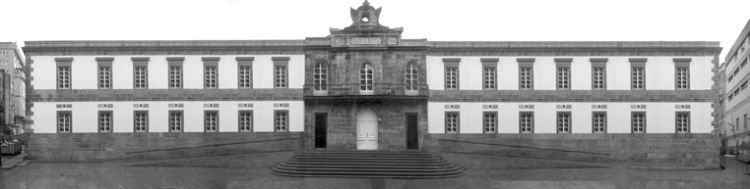
Adaptation: suitability of a construction to a new purpose without its cultural meaning being destroyed. The museum Marco de Vigo is a good example of architectural adaptation, in which an old prison is transformed into a Museum of Contemporary Art, and where the constructive elements in granite maintain their architectural significance.

Restoration: is an intervention on a construction, whose objective is the restoration to a previously known condition.Granite treatments in restoration processes consist of cleaning the material, applying treatments, physical or chemical methods to correct pathologies and recover the original appearance of the stone.

Rehabilitation: it is a very common intervention, whose purpose is the recovery and improvement of a building, the solution of the constructive, functional, hygienical and safety anomalies accumulated over the years, to improve its performance and to match the levels of current requirements. In the rehabilitations, the pre-existing granite is treated for its use in optimum conditions and also new product is used.

Renewal: with the highest impact degree of performance in the pre-existence, it is worth mentioning the level of renewal intervention, which refers to obtaining a new condition, with an implicit idea of improvement or updating, and which implies a replacement of its material components. In these works, new products are used, and the varieties of granite selected resemble or harmonize with the original material.

Reconstruction: rebuild as a result of natural disasters, incidents such as fire or war. It will try to restore the good to its original state using existing or replacement granites, in which case it must be identified that it is not the original material.

Reuse: it involves reusing the existing granite, adapting it to the requirements of a contemporary use, while respecting its character and historical values.

The most common degrees of intervention in architecture are defined with granite. The nobility, durability and versatility of the material, exalt it as the most valued for any type of intervention work in architecture.
Recent Posts